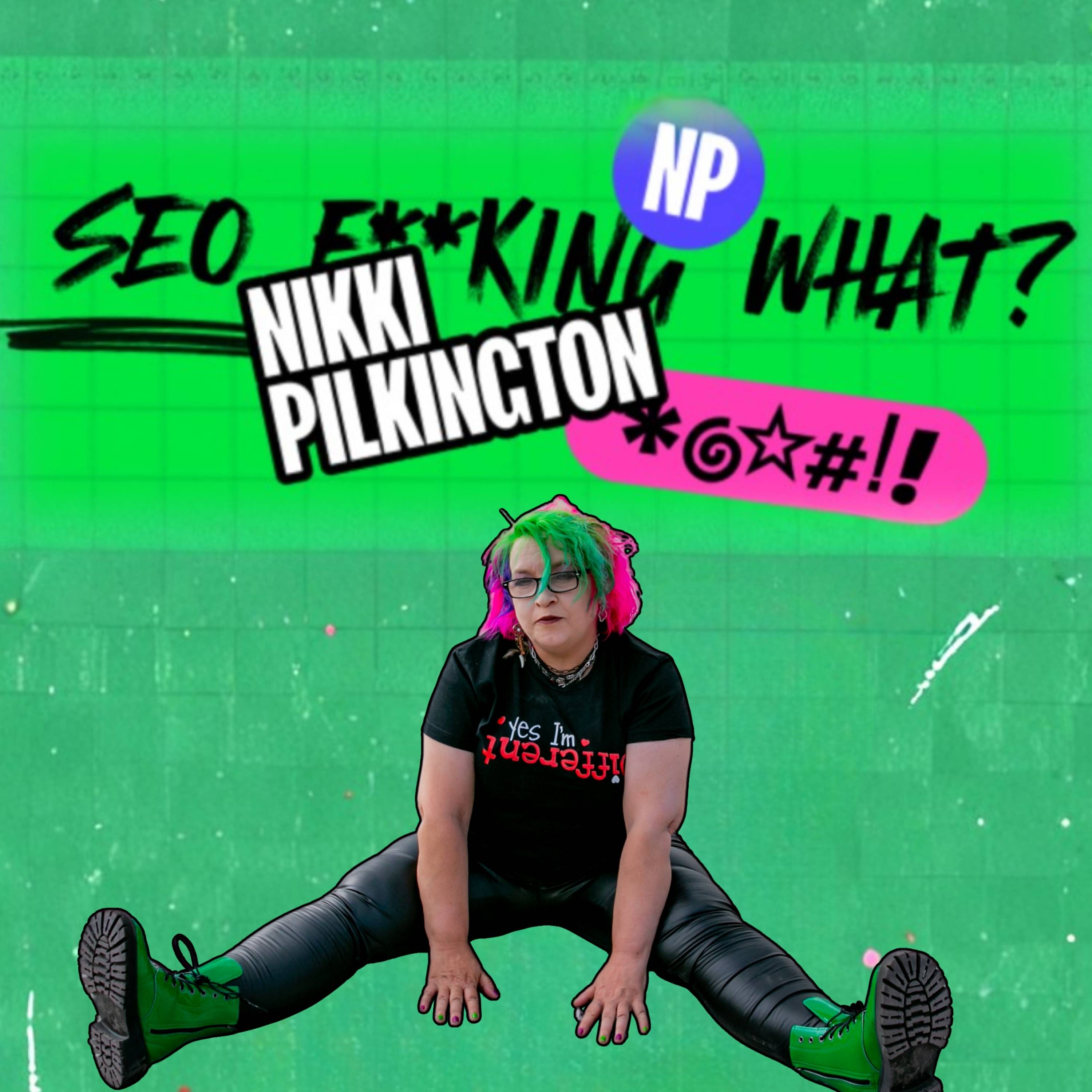
Want good SEO? Stop Blogging Like it's a Diary FFS!
Most businesses aren’t bad at blogging because they’re lazy.
They’re bad at blogging because no one ever told them what blogs are actually for.
Hi, I’m Nikki Pilkington. My site is https://nikki-pilkington.com/ and in this episode of "SEO F**king What", I’m talking about one of the biggest SEO mistakes I see every single week.
Business blogs that read like diaries, newsletters, or internal updates… and then the owner wonders why Google ignores them.
This is the episode your marketing agency probably won’t volunteer to send you.
Because it explains why “blog regularly” was never enough, and how years of well-meaning content can actually f**k up your site instead of helping it.
In this episode, I cover:
Why most business blogs get no traffic at all
Why Google can tell when you’re writing for yourself, not searchers
The types of blog posts nobody is actually Googling
How thin, self-serving content hurts your whole site
What crawl budget is and why it matters
How to choose blog topics people are genuinely searching for
Why keyword research isn’t optional
When to rewrite old posts and when to delete them
Where company news should live if you still want to share it
If you’ve been blogging for months or years and seeing nothing come from it, listen to this.
If your blog is full of “exciting news”, “reflections”, or “a message from the CEO”, listen to this.
And if you’re about to publish another post nobody asked for, definitely listen to this.
Share this with whoever writes your blog.
Share it with your marketing manager.
Share it with anyone about to hit publish on “Reflections on a Wonderful Q1”.
Chapters / Timestamps
00:00 Why your blog isn’t content
01:50 The diary blog problem
03:50 How bad blogs hurt your whole site
06:11 What to do instead
07:20 Matching search intent
08:05 Answering the actual question
09:42 Audit, rewrite, or delete
11:22 When company news is OK
12:20 Final reality check
If you want straight-talk SEO without the fluff, follow SEO F**king What.
More episodes here:
https://seofuckingwhatpodcast.co.uk/
Mentioned in this episode:
Join our blogging masterclass
Transcript
You published a blog post called Exciting News from the Team
Speaker:and you're wondering why no one's reading it. Yeah, that's because
Speaker:Google doesn't give a fuck about your exciting news and neither does
Speaker:anyone else.
Speaker:This is SEO. Fucking what? I'm Nikki and I've been in SEO
Speaker:for over 30 years before it was even called SEO.
Speaker:I help people like you make money from your website by getting found
Speaker:on search. Today we're talking about something that kind of makes me want to
Speaker:put my hair through a wall. Business blogs that read, like personal
Speaker:diaries, company newsletters or motivational
Speaker:Instagram posts. And then the business owner wonders why
Speaker:Google's ignoring them. It's because your blog isn't written for the
Speaker:people searching, it's written for you. And Google can tell
Speaker:the difference.
Speaker:The main problem is that your blog is essentially a vanity
Speaker:project. Because I see this every single week. A business
Speaker:owner comes to me and says, nikki, we've been blogging for two
Speaker:years and we're getting no traffic. Blogging for SEO
Speaker:doesn't work. And I go and look at their blog and what do I find?
Speaker:Welcome to our new website, posted 18 months ago.
Speaker:73 words, 0 useful information. We're
Speaker:hiring. Come join the team. Nobody's Googling that.
Speaker:Nobody. Our trip to the industry awards.
Speaker:Lovely for your mum. Completely fucking useless for SEO.
Speaker:A message from our CEO. And I'm sure Dave's a lovely
Speaker:bloke, but nobody's searching for Dave's thoughts on quarter Three
Speaker:performances. Five reasons we love working here.
Speaker:Great for your careers page. Absolute shite for search visibility.
Speaker:There's not a blog, it's a fucking diary. And diaries
Speaker:are private for a reason, because nobody else wants to read them.
Speaker:And I know why this happens. Someone at some point told
Speaker:you that you need to blog for SEO. And they were right. Blogging
Speaker:can be brilliant for SEO. But they forgot to mention the crucial
Speaker:bit. The blog has to be about things that people are actually
Speaker:searching for, not things you fancy writing about over
Speaker:your morning coffee. Let me explain something that it seems
Speaker:obvious, but it clearly isn't. Based on the number of businesses
Speaker:getting this spectacularly wrong. Google's entire job is
Speaker:to match people's questions with the best answers and that's it.
Speaker:So someone types in how to fix a leaky tap and Google
Speaker:finds the page that answers that question the best. Simple. Now,
Speaker:your blog about winning a regional business award, who's
Speaker:searching for that? Your mum, maybe your Auntie Linda?
Speaker:That's your entire audience. Google knows this.
Speaker:Google can see that nobody is searching for your company name
Speaker:wins an award at Coventry Business Gala 2026.
Speaker:So Google doesn't bother ranking it for anything. Why would it? And
Speaker:you know what? The businesses that do this, they're not stupid, they're
Speaker:not lazy. They've actually put effort into blogging
Speaker:regularly. They've been consistent. They've done the hard
Speaker:bit, sitting down and writing something every week or every
Speaker:month. They've just been writing the wrong things. All that
Speaker:effort, all that time completely wasted because nobody
Speaker:told them to check whether anyone was actually searching for what they were writing
Speaker:about. It's like opening a shop on the high street, stocking it full
Speaker:of products that nobody wants and wondering why you've got no customers. The
Speaker:shop's there, the shelves are full, but you're selling well.
Speaker:Who made that? Nobody's selling left handed cheese graters, are they?
Speaker:Are they? Who knows? I'm going to say it, but you're selling left handed cheese
Speaker:graters and novelty egg timers when everyone walking past wants bread and
Speaker:milk. And this isn't just a missed opportunity, it actually
Speaker:does damage. Because when your blog is full of thin,
Speaker:self serving content that nobody reads, Google forms an
Speaker:opinion about your entire site. Google crawls your blog.
Speaker:It finds 47 posts with an average of 100 words each.
Speaker:No one's linking to them. Nobody's spending more than eight seconds on them before
Speaker:clicking back. The bounce rate's through the roof. And Google
Speaker:thinks, right, this site doesn't have anything useful to offer. So
Speaker:when you do finally publish something decent, proper service
Speaker:page, a genuinely helpful guide. Google's already
Speaker:decided that you're not worth prioritizing. It's called crawl
Speaker:budget and it's a real thing.
Speaker:Google's only going to spend a certain amount of time crawling your site if it's
Speaker:wasting that time on our office dog turn three today and
Speaker:reflections on another wonderful year. It's not spending that time
Speaker:on the pages that actually make you money. And there's also a credibility
Speaker:problem. If a potential customer lands on your blog and it's
Speaker:full of navel gazing company updates, what does that tell them? It
Speaker:tells them that you're more interested in talking about yourselves than helping them solve
Speaker:their problem. That's not a great first impression. Now, I'm not
Speaker:blaming the business owners, not entirely, because this problem
Speaker:usually starts with bad advice. It's the marketing
Speaker:agency that said you need a blog without explaining what that should
Speaker:contain. It's the web designer who said blog
Speaker:regularly and you'll rank. It's the Social media manager who
Speaker:suggested repurposing Instagram content as blog posts.
Speaker:It's the marketing intern who was told to write something for the website
Speaker:with zero guidance on keyword research or search intent.
Speaker:Blogging for SEO without a strategy is like driving
Speaker:without a destination. Recalculating your route. You're
Speaker:burning fuel, you're putting miles on the clock, but you're going
Speaker:absolutely fucking nowhere. And the worst offenders?
Speaker:The content mills and AI content farms, pumping out
Speaker:hundreds and hundreds of generic blog posts with no
Speaker:strategy behind them. 10 fun facts about Accounting,
Speaker:why We Love Mondays the History of Plumbing.
Speaker:Nobody is searching for this shite.
Speaker:So what's the fix? How do you turn your sad, ignored
Speaker:blog into something that actually brings you traffic, leads and
Speaker:money? I'll tell you in just a moment.
Speaker:Here's what you really need to do,
Speaker:and I'm going to keep this practical because I know you're busy running a business
Speaker:and you haven't got time for waffle. So Step one Find out what people are
Speaker:searching for before you write a single word, you need to know what your
Speaker:potential customers are typing into Google. This is keyword research, and
Speaker:it's not optional. It's the difference between writing into the void and
Speaker:writing something that people will actually find. You don't need expensive tools
Speaker:for this. Ahrefs has a free keyword generator. Also Asked
Speaker:has a really good thing for generating questions that people are asking.
Speaker:Type in the words related to your business. See what comes up. Start
Speaker:typing a question into Google. Look at the autocomplete suggestions.
Speaker:These are real searchers. Scroll to the bottom of the results page and
Speaker:look at people also ask and the related searches. That's Google
Speaker:literally telling you what people want to know. Please, for the love
Speaker:of all that is fucking holy, do not use ChatGPT for
Speaker:keyword research. Search. I've said this before and I'll say it again.
Speaker:ChatGPT does not know what people search for. It
Speaker:guesses and its guesses are often bollocks. Use actual
Speaker:search data from actual search engines. Step 2
Speaker:match the search intent Once you've found a keyword or a key phrase,
Speaker:as we should call it, Google it yourself. Look at what's already ranking on
Speaker:page one. This tells you what Google thinks is the best answer to that
Speaker:query. If the top results are all how to guides, write
Speaker:a how to guide. If they're comparison pages, write a comparison
Speaker:page. If they're local service pages, you might need a service page
Speaker:rather than a blog post. Don't try to be clever and write Something
Speaker:completely different from what's ranking. Google has already
Speaker:decided what format works for that search. Your job is to do it
Speaker:better, not differently. Step 3 Answer the fucking
Speaker:question. This sounds stupidly simple, but you'd be
Speaker:amazed how many blog posts don't actually answer the question they claim to be about.
Speaker:If someone searches how much does a new boiler cost in
Speaker:2026? They want numbers, they want price ranges. They
Speaker:don't want 500 words of bollocks about how important boilers
Speaker:are. Before you finally get to the point, answer the question clearly.
Speaker:Answer it early in the post and then expand with detail. One
Speaker:with content and then with your expertise. One question
Speaker:per post. Answer it. Well, that's it. You don't need 3,000
Speaker:words. A few hundred well written words that actually answer what someone's
Speaker:asking will outperform a 5,000 word essay that waffles
Speaker:around the topic without ever getting to the point. Step four
Speaker:Structure it properly. Use headings. Use subheadings. Break
Speaker:your content into sections that someone can scan. Google reads your headings
Speaker:to understand what your pages are about, and humans use them to find the bit
Speaker:they care about. Your main heading, your H1, should include
Speaker:your target keyword. Your subheadings should cover the specific
Speaker:questions or subtopics within that main topic. Think of it like a
Speaker:conversation. The heading tells people what you're going to talk about. The
Speaker:subheadings break that conversation into logical chunks. And
Speaker:for fuck's sake, don't write your title as something cute and cryptic like the
Speaker:secret Ingredient. When the post is about pricing for accountancy
Speaker:services in leads, say what it is. How much does an accountant cost
Speaker:in leads? Boring. Yeah. Effective.
Speaker:Absolutely. Step 5 Audit what you've already got. Go
Speaker:through your existing blog posts. Be honest with yourself. For each one,
Speaker:ask yourself, is anyone searching for this? Does it answer a question that a
Speaker:potential customer might have? Does it have a clear keyword or key phrase,
Speaker:focus? If the answer is no to all three, you've got two
Speaker:choices. Either rewrite it with a proper keyword focus, or
Speaker:delete it. Yep, delete it. I know that
Speaker:feels brutal, but 47 shite blog posts dragging down
Speaker:your site are worse than 10 properly targeted ones doing
Speaker:actual work. Quality over quantity every
Speaker:single time. Before anyone panics, I'm not saying
Speaker:delete everything that isn't keyword focused. If you've got a
Speaker:genuinely useful case study or a post that demonstrates your
Speaker:expertise in a way that builds trust, keep it. But happy
Speaker:National Donut Day from everyone at Smith and company can
Speaker:go straight in the bin. Step 6 Stop letting someone
Speaker:who doesn't know what you do write your blogs. I know this sounds
Speaker:harsh, but your blog content needs to come from someone who understands
Speaker:your business, understands your customers, and ideally,
Speaker:understands basic SEO. If the person writing your
Speaker:blog doesn't know what a keyword is, doesn't understand search intent,
Speaker:and has never looked at Google Search Console, they shouldn't be writing blog
Speaker:posts designed to rank. That doesn't mean you need a specialist writer
Speaker:for every post, but whoever's writing needs at least a basic
Speaker:understanding of what makes content rank. Keyword in the
Speaker:title, clear headings. Answer the question. It's not rocket science,
Speaker:but it does need to be intentional.
Speaker:I can hear you. I can really hear you going, but what about our company
Speaker:news? We're so important. And look, I'm not
Speaker:saying you can never post about company news. If you've
Speaker:genuinely got something newsworthy, a major partnership, a significant
Speaker:achievement, a new service launch, yeah, write about it.
Speaker:Be honest with yourself about whether it's newsworthy to your customers
Speaker:or just newsworthy to you. And if you do want a space for company
Speaker:updates, consider putting them in a separate news section, not in your main
Speaker:blog. Keep your blog focused on content that answers
Speaker:questions and targets keywords. Keep the company updates somewhere
Speaker:else where they won't dilute your SEO efforts. Your blog should
Speaker:be your hardest working marketing asset. Every post should have
Speaker:a job to do. Bring in traffic, answer a question,
Speaker:build authority and trust, or drive leads. If a post isn't
Speaker:doing at least one of those things, then why is it there? So there you
Speaker:have it. Stop treating your blog like a diary. Stop writing for yourself
Speaker:and start writing for the people who are actually searching. Find out what they
Speaker:want to know, answer their questions better than anyone else, and structure it
Speaker:so Google can understand what the hell it's about. Your blog can be one of
Speaker:the most powerful tools in your marketing arsenal, or it can be a
Speaker:graveyard of company updates that nobody reads. The choice
Speaker:is yours. And if this helped, don't keep it to yourself. Make
Speaker:sure you're following SEO Fucking what? In whichever app you're listening to right
Speaker:now so you don't miss the next episode. Share this one with your
Speaker:marketing manager. Share it with whoever writes your blog. Share it
Speaker:with anyone who's about to publish a post called Reflections on a wonderful
Speaker:Q1. And if you want me to take a look at your blog and tell
Speaker:you what's working and what's not, find me on LinkedIn or drop me
Speaker:an email via Nikki hyphen pilkington.com until
Speaker:next time. Get found. Make money. For fuck's sake.
Speaker:Stop blogging about the office dog.