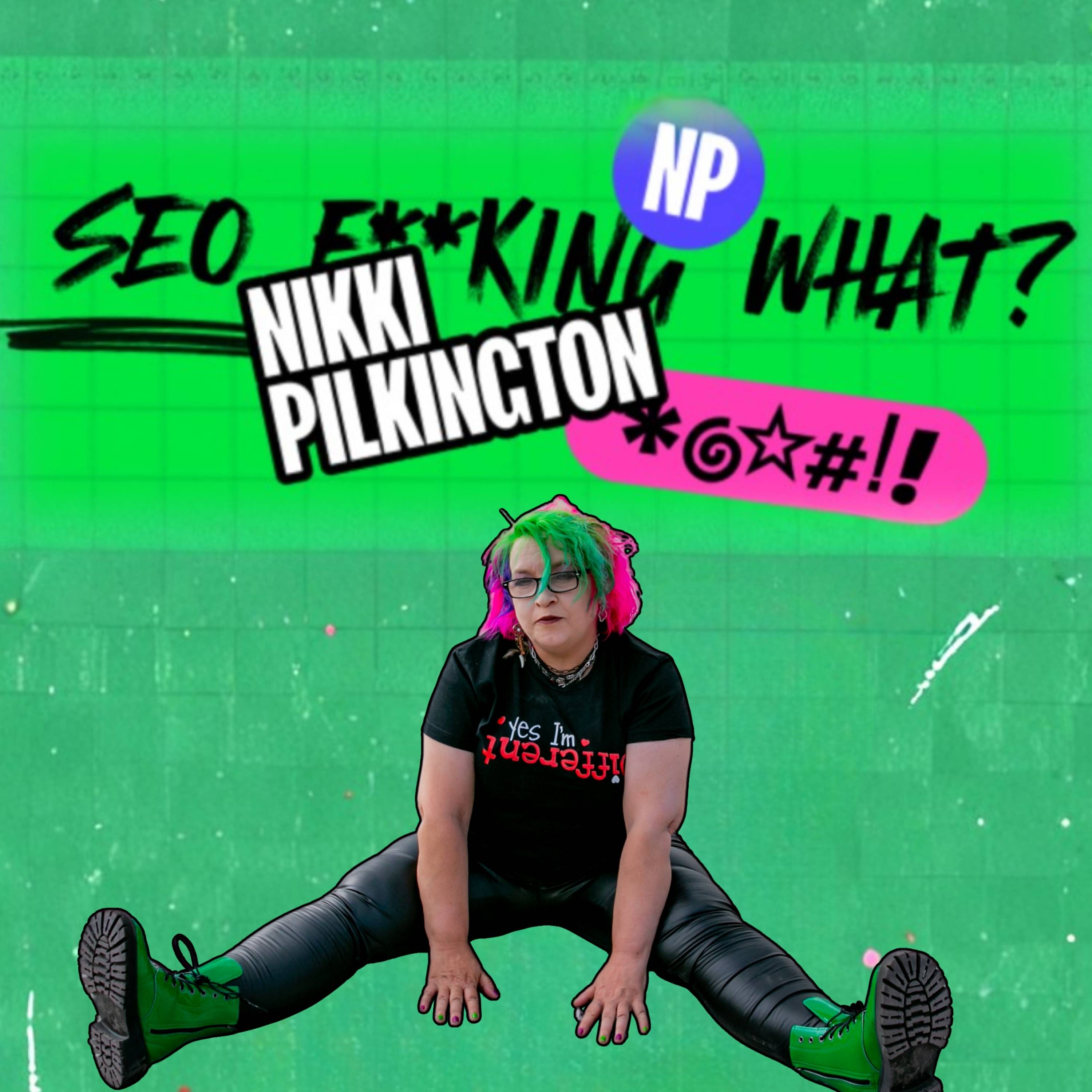
Your Competitors - SEO Geniuses? No. You're Just Sh*t At The Basics!
I'm sick of business owners coming to me convinced their competitors have some secret SEO strategy. They don't. You're just making it ridiculously easy for them to beat you by ignoring the fundamentals on your own website.
Hi, I’m Nikki Pilkington. My site is https://nikki-pilkington.com/ and in this episode of "SEO F**king What", I’m talking about:
- The 7 most common ways you're sabotaging your own SEO (I guarantee at least three apply to you)
- Why your homepage title saying "Home" makes you invisible to Google
- How your 50-word service pages are getting destroyed by competitors who bothered to write 800 words
- The Google Business Profile mistakes that hand free visibility to everyone else
- Why your site loading slower than a wet weekend is killing your rankings
- A 30-minute self-audit you can do today to fix the obvious stuff
The uncomfortable truth: Your competitor's website probably isn't that impressive. They've just done the basics - proper page titles, decent content, a filled-in Google Business Profile, and a site that actually works on mobile. That's it. No magic formula. Just competent execution of SEO fundamentals that you haven't got around to yet.
I've been in SEO for over 30 years, and I help businesses make money from their websites by getting found in search. This episode is your wake-up call to stop stalking your competitors' websites and start fixing your own.
Stop blaming your competitors. Fix your own shit first.
Chapters / Timestamps
00:00 - Introduction: The Real Reason You're Losing at SEO
02:05 - Common SEO Mistakes Sabotaging Your Success
02:28 - Mistake #1: Your Meta Titles Are Useless
03:10 - Mistake #2: Your Service Pages Are Thinner Than an Over-Filtered Influencer
04:00 - Mistake #3: You've Got No Internal Links
04:40 - Mistake #4: Your Google Business Profile Is a Ghost Town
05:20 - Mistake #5: Your Site Is Slower Than a Wet Weekend
06:00 - Mistake #6: Your Mobile Experience Is Atrocious
06:40 - Mistake #7: You've Got Broken Shit Everywhere
07:20 - Why We Focus on Competitors Instead of Our Own Sites
08:22 - How to Fix Your SEO Issues: The 30-Minute Self-Audit
09:00 - Step 1: Check Your Page Titles
09:40 - Step 2: Check the Words on Your Key Pages
10:10 - Step 3: Click Every Link on Your Site
10:40 - Step 4: Load Your Site on Your Phone
11:00 - Step 5: Check Your Google Business Profile
11:30 - Step 6: Look at Your Internal Links
12:10 - Step 7: Search for Yourself on Google
12:40 - Stop Looking Over the Fence
13:47 - Final Thoughts and Actionable Steps
If you want straight-talk SEO without the jargon, follow SEO F**king What.
More episodes here:
https://seofuckingwhatpodcast.co.uk/
Mentioned in this episode:
Join our blogging masterclass
Transcript
You're convinced your competitors are smashing it at SEO, but
Speaker:they're not. You're just making it really fucking easy for them
Speaker:by sabotaging yourself.
Speaker:This is SEO Fucking What. I'm Nicky, and here's the deal.
Speaker:I've been in SEO for over 30 years, before it was even called
Speaker:SEO. I help people like you make money from your website
Speaker:by getting found online. Today I want to talk about you
Speaker:business owners who obsess over what your competitors are doing.
Speaker:You stalk their websites, panic about their rankings, lose sleep over
Speaker:their blog posts, while your own website is held together with sticky
Speaker:tape and good intentions. Your competitors aren't beating you,
Speaker:you're handing them the win on a plate, and I'm going to show you
Speaker:exactly how you're doing it. Let me
Speaker:paint you a picture, because I guarantee this is going to sound familiar.
Speaker:Business owner comes to me and says, Nikki, our competitor is ranking above
Speaker:us for everything. What are they doing that we're not? So I
Speaker:look at the competitor's site and 9 times out of 10, it's
Speaker:nothing special. It's just competent.
Speaker:They've got the basics right. Decent page titles, clear service
Speaker:pages, a blog that targets keywords and search intent that people
Speaker:are looking for online. Their site loads in a reasonable time.
Speaker:Their Google Business Profile is filled in properly. And that's it.
Speaker:That's the big secret. And then I look at my potential client's
Speaker:site and it's a fucking disaster area. The
Speaker:homepage title says home. Half
Speaker:the service pages have about 40 words on them. The
Speaker:blog hasn't been updated since the coronation.
Speaker:Their Google Business Profile still list their old phone number.
Speaker:There are broken links everywhere. The contact form doesn't
Speaker:work on mobile. And they want to know what clever
Speaker:strategy their competitor is using. Mate, your competitor isn't
Speaker:using a clever strategy. They've just done the basics and you
Speaker:haven't. And that's the whole story. So let me walk you through the
Speaker:most common ways businesses absolutely sabotage their own
Speaker:SEO. And I want you to be honest with yourself here. Because I
Speaker:guarantee at least 3 of these apply to you.
Speaker:Number 1, your meta titles are useless. I've
Speaker:talked about this before, but it bears repeating because it's still the
Speaker:single most common SEO problem I see. Your homepage
Speaker:says home. Your About page says About. Your Services
Speaker:page says Services. Congratulations, you've told Google
Speaker:absolutely fuck all about what you do or where you do it. Your
Speaker:meta title is the first thing that Google reads.
Speaker:It's the thing that shows up in search results. If it just says Home
Speaker:followed by your company name, you're invisible. Your
Speaker:competitor who says Affordable Accounting Services in
Speaker:Ipswich flat fee tax returns, it's going to beat you
Speaker:every single time. And it's not because they're SEO
Speaker:geniuses, it's because they've told Google what the website is about
Speaker:and you haven't. Number 2, your service pages
Speaker:are thinner than an over-filtered influencer. I see
Speaker:this constantly. Business has 6 or 7 services and each
Speaker:one gets a page with maybe 50 words on it. We offer web
Speaker:design, contact us for a quote, and loads of lovely pictures. That's
Speaker:it. That's the whole page. Google looks at that and thinks, well, this
Speaker:clearly isn't a resource on web design or someone who
Speaker:has expertise on web design. And someone else has written 800
Speaker:words explaining their process, their pricing, what's included,
Speaker:frequently asked questions, examples of their work. Who do
Speaker:you think Google's going to rank? Your competitor isn't
Speaker:outspending you. They've just written more than 2 sentences about
Speaker:what they do. Number 3: You've got no internal
Speaker:links. Internal links are how Google finds its way around your
Speaker:site. They're also how Google understands which pages are most important
Speaker:and how topics relate to each other. If your pages are all
Speaker:isolated with no links in between them, then Google has to
Speaker:work harder to understand your site. And Google, like me,
Speaker:doesn't like working harder than it needs to. Your competitor's blog
Speaker:posts link to their service page. Their service page links to relevant
Speaker:case studies. Their case studies link back to the blog.
Speaker:Everything's connected. Your site? Google
Speaker:crawls your homepage, finds no links to your service pages because they're
Speaker:buried in a dropdown menu followed by another dropdown menu, and
Speaker:gives up. You've built a maze with no map. Number 4:
Speaker:Your Google Business Profile is a ghost town. If you're a
Speaker:local business and your Google Business Profile is either not claimed half-filled,
Speaker:or hasn't been touched since 2022, you're handing free
Speaker:visibility to every competitor who has bothered to fill in theirs
Speaker:properly. No photos, no posts, no responses
Speaker:to reviews, wrong opening hours, missing service
Speaker:descriptions. Your competitor doesn't need to be doing anything
Speaker:fancy. They've just filled in the form and you haven't. And
Speaker:Google rewards the businesses that give it complete, accurate,
Speaker:up-to-date information. Number 5: Your site is
Speaker:slower than a wet weekend. Pull your site up on your phone right now.
Speaker:Go on, do it now. How long does it take to load?
Speaker:If it's more than about 3 seconds, you've got a problem because
Speaker:your visitors are leaving before the page even appears. And
Speaker:Google knows this. Google measures this. And Google doesn't
Speaker:want to send people to sites that take forever to load. Your
Speaker:competitor's site loads in 2 seconds because they've got properly sized
Speaker:images, decent hosting, and a developer who gives a
Speaker:shit. Yours takes 8 seconds because someone uploaded a 15MB
Speaker:photo of the office and your hosting costs less than a Gregg's sausage roll.
:Your mobile experience is atrocious.
:More than half of all web traffic is mobile now. More
:than half. If your website looks like it was designed for a desktop
:monitor in 2014, and nobody's checked what it looks like on a
:phone, you're losing visitors by the shedload. If
:your buttons are too small to tap, you need a magnifying glass to read
:your text, you have images that hang off the edge of the screen,
:a contact form that's impossible to fill in with your thumbs— your
:competitors didn't hire some fancy mobile specialist, they
:just tested their site on a phone and fixed the obvious problems.
:You didn't test it. You assumed it was fine. It's not.
:You've got broken shit everywhere. Broken
:links, 404 errors, pages that redirect to the wrong place,
:images that don't load, contact forms that don't send, download
:links that go nowhere. Every broken element on your site is a
:signal to Google that nobody's looking after it. It's like having a
:shop with smashed windows and a crooked sign. Would you walk in?
:Would you trust that business? Google thinks the same way. Your
:competitor's site works. Everything clicks where it should. Pages
:load, forms send. That's not advanced SEO.
:That's basic website maintenance. And you're not doing it.
:And I get it. I understand why people focus on
:competitors instead of their own site. It's easier to look outward than
:inward. It's more comfortable to think, well, they must be doing something
:clever. Than it is to admit, I haven't done the
:basics. Nobody wants to hear that their website's a mess.
:It's like being told your house is untidy. You get defensive.
:But here's the good news. If the problem is that you haven't done the
:basics, the fix is doing the basics.
:You don't need a massive budget. You don't need to hire an expensive
:agency. You don't need some secret strategy. You just
:need to look at your own site with honest eyes and fix the obvious
:stuff. And that's actually a much better position to be in
:than thinking your competitor has some magic formula you can't
:replicate. Because you absolutely can replicate
:fill in your Google Business Profile or write more than 2
:sentences on your services page. So go do it. So how
:do you actually fix this? How do you stop obsessing over the
:competition and start sorting out your own shit? I've got a
:30-minute self-audit that'll show exactly where you're going wrong.
:And I'll share that with you right after this.
:Okay, here's your homework. And I'm serious.
:Really do this. Don't just listen and nod along and then
:carry on stalking your competitor's website. Put aside half an hour.
:Open your site and go through this lot. First of all, open every
:page and look at the browser tab. The text in the browser tab is
:your page title. If any of them say Home or
:About or Services or just your company name with nothing else,
:fix it. Every page title should describe what's on that
:page. Maybe a location if you're a local business.
:Affordable plumbing in Leeds. Emergency boiler services in
:Northampton. Not just services, not just home.
:Write it like you're trying to help someone understand what the page is
:about from one line of text, because that's exactly what
:Google's doing. Then check the words on your key pages.
:Open your main service pages. Highlight the text. If any
:page has fewer than 200 words, it's too thin. Google
:needs content to understand what your page is about. Your service
:pages need to explain what you do Who you do it for, where
:you do it, what's included, and ideally answer common
:questions. Aim for at least 400 words.
:Knock it out of the park, do 800. Not waffle,
:useful specific information that a potential customer would want
:to read. And then click every link on your site. I'm not
:joking, every single one. Click your menu links, links in
:your content, click buttons. If anything goes to a 404 page,
:an error, or somewhere it shouldn't, Note it down and fix it. Or if you
:can't face doing this manually, use a free tool like Screaming Frog.
:The free version lets you crawl up to 500 URLs and it'll
:find broken links for you in minutes. There's no excuse for broken
:links. None. Then load your site on your phone. Pull out
:your phone, load your homepage, navigate around, try to find your
:contact page, try to fill in your contact form, try to tap
:your phone number to call. If any of that is frustrating,
:confusing, or slow, or broken, that's
:what your customers are experiencing. Fix it.
:Run your site through Google's PageSpeed Insights. See what it says
:about your mobile performance. If your mobile score is below 50,
:you've got work to do. Now look at your Google Business Profile.
:Go to google.com/business and check your listing. Is
:every section filled in? Are your opening hours correct? Is your phone
:number right? Have you got recent photos on there? Have you responded
:to your reviews? If your profile is incomplete or outdated,
:sort it today. It's free. It takes an hour at the most.
:And for local businesses, it's often where your first leads will come from.
:Now go and look at your internal links. Pick any page on your site.
:Are there links within the text that point to other relevant pages?
:Do your blog posts link to your services pages? Do your services
:pages link to relevant blog posts? If every page is an
:island with no connections, you need to add
:internal links. This is going to help Google
:understand your site structure, and it helps visitors find the information
:they need. When you mention a service in a blog post, link
:to the service page. When your service page references a common
:question, link to the blog post that answers it. It's not
:complicated, it just needs to be done. Now search for yourself
:on Google. Open a private or incognito window and
:search for the things your customers might search for. Okay,
:not your business name, the actual problems you solve.
:SEO copywriter in the UK, tax accountant in
:Sheffield, how much does SEO cost? Are you showing
:up? If not, is your competitor, and if they are,
:look at what they've got that you haven't. I'll bet you a tenner
:it's better page titles, more content, properly filled in
:Google Business Profile. Not some secret tactic, just the
:basics. Stop looking over the fence.
:Look, I'm not saying never look at what your competitors are doing.
:Competitor research has its place, but if your own site is a
:mess, spending time analyzing someone else's strategy is
:often a complete waste of your energy. It's like worrying about
:what trainers your opponent is wearing when you haven't even put your own
:shoes on yet. Fix your own shit first. Get the
:basics right. And then, once your site is solid, once
:your pages are properly titled, your content is useful, your site
:works on a mobile, and your Google Business Profile is complete,
:then, and only then, can you start thinking about what
:more you could do to compete. But I promise you,
:for most small businesses, just doing the basics properly
:will catapult you past half of your competition because most
:of them haven't done them either. The bar is on the floor.
:You just need to step over it.
:So there you have it. Stop blaming your competitors. Stop
:assuming they've got some secret weapon because they haven't. They've just
:done the basics that you haven't got around to yet. That's where the wins
:are. Not in some competitor analysis tool, not in some
:guru's framework. The wins are in your own website, waiting
:for you to fix it. Do the 30-minute audit, be honest with
:yourself, fix the obvious stuff, and I guarantee you'll see more
:improvement than from any amount of competitor stalking. And
:if this helped, don't keep it to yourself. Make sure you're following
:SEO Fucking What in whichever app you're listening to right now. So you
:don't miss the next episode. Share this one with a business owner
:who's convinced their competitor's got some magic formula. Send it
:to anyone who spends more time looking at other people's websites than fixing
:their own. And if you want me to take a look at your site and
:tell you honestly where you're going wrong, find me on LinkedIn or head
:to nickyhifrompilkington.com. Until next time,
:get found, make money, and for fuck's sake, fix your
:own website before you worry about anyone else's.