Some SEO Advice For Whoever Runs Your Website - "Admin" Is Hiding Your Expertise from Google
Who wrote the last blog post on your website? If the page says admin, Google's asking the same fucking question. So are your customers.
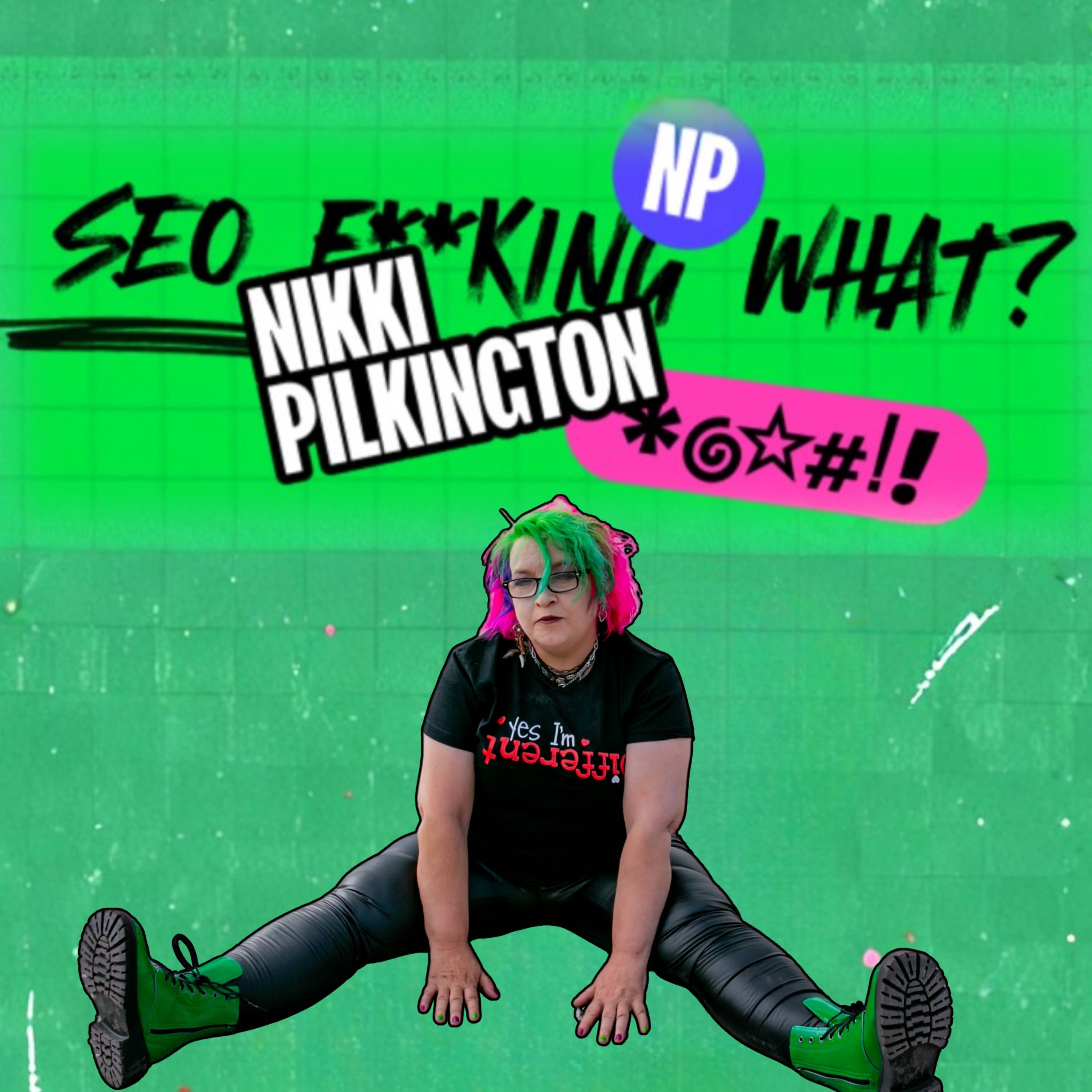
Hi, I'm Nikki Pilkington. My site is https://nikki-pilkington.com/ and in this episode of "SEO F**king What", I'm talking about who wrote your website. AI has made faking an expert so easy that being a real one is now one of the best advantages you've got, and most of you are throwing it away by publishing everything as "admin". You've got the qualifications, the scars and the client stories, and the page that's meant to prove it is signed by a WordPress username. That's bollocks, and it's fixable in an afternoon.
Here's what I'm covering:
— Why "posted by admin", "posted by team" or no name at all throws away years of expertise you actually earned
— Sports Illustrated's made-up writers, CNET Money Staff, and why a faceless byline protects nobody
— The honest bit: an author bio isn't a ranking factor on its own, so why bother? Because it makes your expertise checkable by Google, by AI tools and by the person deciding whether to ring you
— How Google joins the dots between you on your site, on LinkedIn, in the trade press and on that conference stage, and why that's the one thing AI can't fake
— The dickheads inventing authors on purpose, and why a fake "medically reviewed by" is a liability, not a shortcut
— How an "admin" username on WordPress can hand anyone who wants to break into your site half your login
— The fix, step by step: real names, proper author pages, links that go both ways, Person schema with sameAs, honest reviewers, and existing somewhere other than your own website
I also give you a proper piece of homework. Not the "might do that one day" kind. The actual do-it-this-week kind: five steps, starting with counting how many of your posts were written by "admin".
If this is useful, send it to whoever runs your website. Especially if their name is Admin.
Get found. Make money. And go and find out who the fuck admin is.
Chapters:
00:00 Who Wrote Your Website
01:14 AI Made Faking Experts Easy
03:45 How Google Joins The Dots
06:25 The Fix And Your Homework
Links mentioned:
Non-Wanky SEO Courses (the On-Page SEO Toolkit is free, it was £200): https://nonwankyseo.com
Episode 18, the content audit episode (including AI-written content): https://seofuckingwhatpodcast.co.uk/episode/you-havent-read-your-own-website-have-you-time-for-a-content-audit
Episode 12, on why you shouldn't stick GEO in your LinkedIn headline: https://seofuckingwhatpodcast.co.uk/episode/ffs-seos-dont-add-geo-to-your-linkedin-headline
Google's guidance on helpful, people-first content (the "who wrote this?" questions): https://developers.google.com/search/docs/fundamentals/creating-helpful-content
Google's author markup best practices (only the name in the name field, and sameAs): https://developers.google.com/search/docs/appearance/structured-data/article
Follow Nikki:
LinkedIn: https://www.linkedin.com/in/nikkipilkington/
Instagram: https://www.instagram.com/nikkipilkington/
Bluesky: https://bsky.app/profile/nikkipilkington.bsky.social
Transcript
Who wrote the last blog post on your website?
Speaker:If the page says admin, Google's asking the same fucking question.
Speaker:So are your customers.
Speaker:This is SEO Fucking What.
Speaker:I'm Nikki, over 30 years doing this, back before it was even called SEO, and I help
Speaker:small business owners make money from their websites by actually getting found.
Speaker:Today, we're going to talk about who wrote your website.
Speaker:Because AI has made faking an expert so easy that being a real one is now
Speaker:one of the best advantages you've got, and most of you are throwing it away
Speaker:by publishing everything as admin.
Speaker:Go and have a look.
Speaker:Open your blog, pick a post, and look under the title.
Speaker:Posted by admin, posted by team, posted by the company name, like a limited
Speaker:company sat down and wrote 800 words on choosing an accountant, or no name at all.
Speaker:But you've spent years getting good at what you do.
Speaker:You've got the qualifications, the scars, the client stories, and the
Speaker:page that's meant to prove it is signed by a WordPress username.
Speaker:A few years ago, writing a decent article took effort.
Speaker:Somebody had to know something.
Speaker:These days, anyone can churn out 100 posts by Friday that sound like
Speaker:they were written by an expert.
Speaker:They weren't.
Speaker:They were written by a machine that's really good at sounding like
Speaker:it knows what it's talking about.
Speaker:The fakery doesn't stop at the content.
Speaker:In late 2023, Sports Illustrated got caught publishing product
Speaker:reviews by writers who didn't exist.
Speaker:Made-up names, made-up bios, and at least one headshot that turned out to be for
Speaker:sale on a site selling AI-generated faces.
Speaker:Sports Illustrated, not some backstreet affiliate site.
Speaker:People lost their jobs over it.
Speaker:Earlier that same year, CNET was publishing AI-written money articles under
Speaker:a byline that just said CNET Money Staff.
Speaker:A load of them needed corrections afterwards.
Speaker:A faceless byline didn't protect anybody.
Speaker:It made it look like nobody was willing to put their name to it, because nobody was.
Speaker:So the internet is now full of content that sounds expert, which means sounding
Speaker:like an expert is worth fuck all.
Speaker:What's worth something is being able to prove there's an actual person behind
Speaker:it who really does this and who exists somewhere other than your About page.
Speaker:Google has been banging on about this for years.
Speaker:Their own guidance on helpful content asks, more or less, "Is
Speaker:it obvious who wrote this?
Speaker:Is there a byline where you'd expect one?
Speaker:Does that byline take you somewhere that tells you who this person is?"
Speaker:Admin fails all three.
Speaker:Admin doesn't even get out of bed.
Speaker:Now I'm gonna be straight with you, 'cause I'm not gonna sell you a
Speaker:myth in an episode about fakery.
Speaker:Google has said more than once that an author bio is not a
Speaker:ranking factor on its own.
Speaker:Sticking a name on a post does not push you up the rankings.
Speaker:What it does is make your expertise checkable by Google, by the AI tools
Speaker:pulling answers together, and by the person deciding whether to ring you
Speaker:or the next company down the list.
Speaker:Think of it like a business card.
Speaker:A card that just says "consultant" is useless.
Speaker:A card with a name, a job, and a number that people can check against everything
Speaker:else they've heard about you, that's the one that gets the phone call.
Speaker:So here's what I want you to get your head around.
Speaker:Google isn't just reading your page.
Speaker:It's trying to work out who's behind it and whether that's the
Speaker:same person it's seen elsewhere.
Speaker:If Sarah Jones writes a post on your site about employment law, and there's
Speaker:a Sarah Jones on LinkedIn who's been an employment solicitor for 15 years,
Speaker:and a Sarah Jones quoted in the trade press, and a Sarah Jones who spoke at
Speaker:a conference last spring, Google wants to be able to say, "That's one person."
Speaker:Same name, same face, same subject, all pointing at each other.
Speaker:And when that joins up, you've got something that AI can't easily fake.
Speaker:Anybody can generate a bio.
Speaker:Faking 10 years of other people talking about you is a hell of a lot harder.
Speaker:When it doesn't join up, you're a stranger.
Speaker:When it's posted by admin, no photo, no bio, no links, you might
Speaker:be the best in the country at what you do, and the page gives nobody
Speaker:a single reason to believe it.
Speaker:And it's not only the admin lot.
Speaker:There's a whole other bunch of dickheads making up authors on purpose.
Speaker:Invented senior consultants with a stock photo and a bio that says,
Speaker:"Passionate about delivering value."
Speaker:Agencies putting a fake expert on a client's blog because it looks better
Speaker:than "Written by our content agency".
Speaker:"Medically reviewed by", with a name nobody can find anywhere.
Speaker:If you've got one of those on your site, take it down.
Speaker:It's not a shortcut.
Speaker:It's a liability.
Speaker:And another thing, if you're on WordPress and your posts say admin, there's a decent
Speaker:chance that's your actual login username.
Speaker:And WordPress very helpfully puts author pages at an address
Speaker:that can give that username away.
Speaker:So you're not only telling Google you're nobody, you're handing anyone who wants
Speaker:to break into your site half your login.
Speaker:Change it.
Speaker:If you've listened to episode 18, you know I'm not anti-AI.
Speaker:Use it to draft if you want, but somebody who knows the subject has to go through
Speaker:it properly and put their name on it.
Speaker:And if nobody in your business is willing to put their name on a piece of content,
Speaker:that tells you everything you need to know about whether it should be published.
Speaker:After the break, I'm gonna tell you how to fix this,
Speaker:step by step, so that Google, the AI tools, and your next customer all
Speaker:know who you are and that you're the same person everywhere they look.
Speaker:Okay, so here's the fix.
Speaker:Put a real name on every post.
Speaker:A human being, not admin, not team, not the company.
Speaker:If you wrote it, it's yours.
Speaker:If your colleague wrote it, it's theirs.
Speaker:If a freelancer wrote it and your expert edited and approved it, the
Speaker:expert's name goes on it, and they better have actually fucking read it.
Speaker:Sort out WordPress.
Speaker:Go into your user profile and set the display name to your real name.
Speaker:While you're there, if your username is "admin", make a new user with a
Speaker:proper username, move your posts across to it, and get rid of the old one.
Speaker:10 minutes.
Speaker:Do it today.
Speaker:Link the byline to an author page.
Speaker:Click the name, land on a page about that person.
Speaker:On that page, you want a real photo.
Speaker:Not a stock photo, not an AI one, you.
Speaker:A bio that says what you've actually done.
Speaker:15 years running payroll for manufacturing firms beats "passionate, results-driven
Speaker:professional" every single time.
Speaker:What you do for the business, and then links out to where you exist elsewhere.
Speaker:LinkedIn, podcasts you've been on, articles you've written for
Speaker:the trade press, talks you've given, book if you've got one.
Speaker:Make the links go both ways.
Speaker:Your LinkedIn should link back to your website.
Speaker:When you write a guest piece or get quoted, ask for your bio
Speaker:to link to your author page.
Speaker:Same name everywhere.
Speaker:If you're Elizabeth on your site and Liz on LinkedIn, pick one.
Speaker:The same headshot everywhere too.
Speaker:Joining the dots is the whole point.
Speaker:And then add the schema.
Speaker:Now, this is a bit of a techy bit, but it's not that hard.
Speaker:Your SEO plugin can usually do it.
Speaker:You want person markup for the author with a link to the author page and a
Speaker:list of the profiles that are also you.
Speaker:In Google's language, that's sameAs.
Speaker:And put only the name in the name field, not "Sarah Jones, Director", not
Speaker:"posted by Sarah", just "Sarah Jones".
Speaker:Be honest about reviewers.
Speaker:If you use "reviewed by", the reviewer needs to be a real findable
Speaker:person who really reviewed it.
Speaker:Otherwise, take it off.
Speaker:Go and exist somewhere other than your own website.
Speaker:This is a bit of a slow one, and I get it, but it's the one that counts.
Speaker:Say yes to the podcast invite.
Speaker:Write the article for the industry magazine.
Speaker:Answer the journalist request.
Speaker:Turn up and talk at the local business event.
Speaker:Every one of those is someone else confirming that you are who you say you
Speaker:are, and that's what your competitors with their AI blog factory can't buy.
Speaker:And for the SEOs listening, this is the same point I made in episode 12
Speaker:about sticking GEO in your headline.
Speaker:You don't need a new acronym to show up in AI answers.
Speaker:You need to be a real expert who's easy to identify.
Speaker:That's all you need to do.
Speaker:So here's your homework for this week.
Speaker:One, count your admins.
Speaker:Go through your blog and note how many posts are by admin or team
Speaker:or the company name or nobody.
Speaker:That's your to-do list.
Speaker:Then two, change the display name and the username today before you forget.
Speaker:Then three, build or fix one author page, yours.
Speaker:Photo, real bio, links out.
Speaker:If it's already there, read it as if you'd never met yourself.
Speaker:Would you hire you?
Speaker:Four, Google your own name plus your job and see what comes up.
Speaker:If it's a LinkedIn profile with a photo from 2011 and a different job title to
Speaker:your website, fix that so they match.
Speaker:And five, pick one place to show up this month.
Speaker:One guest article, one podcast, one talk, just one.
Speaker:AI can fake the words.
Speaker:It can fake the photo.
Speaker:It can even fake a bio that sounds like it's been doing this for 20 years.
Speaker:What it can't fake is a real person who has been doing the work for
Speaker:years with other people saying so.
Speaker:If that's you, stop hiding it behind admin.
Speaker:If this was useful, follow SEO Fucking What wherever you're listening and
Speaker:send it to whoever runs your website, especially if their name is Admin.
Speaker:My On-Page SEO Toolkit is still free, so go and grab it at nonwankyseo.com.
Speaker:It was £200.
Speaker:You can get it for nothing.
Speaker:And until next time, get found, make money, and go and find
Speaker:out who the fuck admin is.