Your Portfolio Page Title Is KILLING Your SEO
Go and look at your case studies page or your portfolio page. Does the title just say "case studies" or "portfolio"? So does everyone else's. That's the problem.
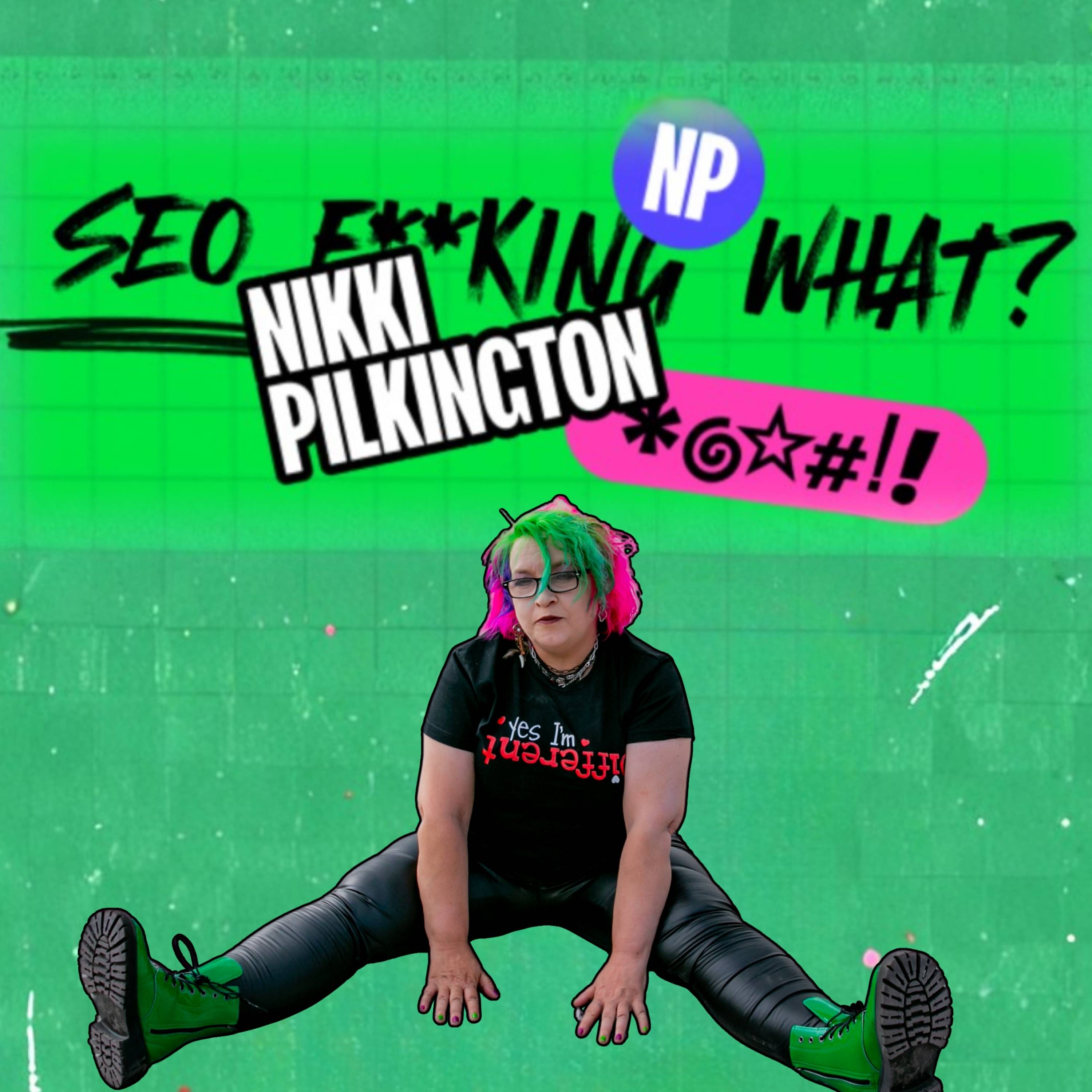
I'm Nikki Pilkington and I've been doing SEO for 30 years. In this episode I'm going after the most wasted pages on your entire website — your case studies, your portfolio and your testimonials. Beautiful work, real proof of competence, and page titles that could belong to any business in Britain.
Here's the SEO problem. A meta title gives you about 60 characters. "Portfolio" uses nine of them and tells Google nothing about what you do or who you do it for. Then each individual case study gets named after the client's venue, so you end up competing with the venue's own website for its own name — a fight you lose, and when you don't lose it, you get a visitor who bounces in three seconds because they wanted tickets, not you.
Your case studies are the only pages on your site that naturally combine a service, a sector, a location and a real situation. That is exactly how B2B search works. And you've called them Client Project 3.
In this episode:
— The nine-character title every portfolio page in the country shares
— What to put in the other 51 characters, with worked examples
— Why "Brands Hatch 2025" is a page title that can only lose
— Six case study crimes: the PDF, the email form, the bespoke-solution waffle, image_4471.jpg, the missing internal links, and the one from 2021
— How to write a specific, rankable case study when there's a genuine NDA
— Four bits of homework you can do this week, starting with a ten-minute one
⏱ CHAPTERS
00:00 The most wasted pages on your website
00:59 The world's most generic page title
02:53 Why naming it after the client backfires
04:12 Long-tail gold: what those pages should be called
05:40 Six case study crimes
07:22 "But I can't name my clients"
08:49 Your homework: four jobs
09:59 Go and look at that meta title
🔗 LINKS
Non-Wanky SEO Courses (the On-Page SEO toolkit is free right now): https://nonwankyseo.com
Nikki's site: https://nikki-pilkington.com/
The podcast: https://seofuckingwhatpodcast.co.uk/
Google on page titles: https://developers.google.com/search/docs/appearance/title-link
Google on image alt text: https://developers.google.com/search/docs/appearance/google-images
👋 FOLLOW NIKKI
LinkedIn: https://www.linkedin.com/in/nikkipilkington/
Instagram: https://www.instagram.com/nikkipilkington/
Bluesky: https://bsky.app/profile/nikkipilkington.bsky.social
If you know someone with a portfolio page full of beautiful work and page titles nobody could ever search for, send them this one.
Get found. Make money. Stop stressing. And go and look at that meta title.
Transcript
Go and look at your case studies page or your portfolio page.
Speaker:Does the title just say case studies or portfolio?
Speaker:I thought so.
Speaker:Let's go.
Speaker:This is SEO Fucking What.
Speaker:I'm Nikki, 30 years in SEO, and today I'm going after the most wasted pages on your
Speaker:entire website, your portfolio page, your case studies pages, your testimonials,
Speaker:whichever of those you've got.
Speaker:And this is what made me want to do this episode.
Speaker:I've mentioned case studies three times on this show.
Speaker:I've told you your service pages should link to them.
Speaker:I've told you they should sit properly in your site structure.
Speaker:I've told you they're the kind of page that backs up everything else you do.
Speaker:But I've never really told you what to do about the SEO on them.
Speaker:So that's today, because these pages should be doing a fuck
Speaker:ton more work than they are, and almost no one sets them up properly.
Speaker:The first problem is usually that your portfolio or case studies main page
Speaker:has the world's most generic title.
Speaker:So start with the top level page, the one that lists everything.
Speaker:Go and look at the meta title right now.
Speaker:Remember, you hover your cursor above the browser, and that's what appears there.
Speaker:I'll wait while you do that.
Speaker:Does it say "portfolio" and then your company name, or "case
Speaker:studies" and then your company name?
Speaker:Yeah, course it does.
Speaker:So think about what you've just done.
Speaker:Every single company in this country with a portfolio page
Speaker:has that exact same title.
Speaker:Everyone.
Speaker:The wedding photographer, the structural engineer, the branding agency, the
Speaker:bloke who fits kitchens, all of you sitting there with identical titles
Speaker:competing with each other for a word that describes a type of page
Speaker:rather than a type of business.
Speaker:You've got about 60 characters in a meta title, give or take.
Speaker:You've used nine of them and told Google absolutely fuck all.
Speaker:So let's use them.
Speaker:What about "small business accountancy case studies", or
Speaker:"charity video production portfolio", or "HR coaching testimonials"?
Speaker:Now Google knows what's on the page.
Speaker:Now I know what's on the page,
Speaker:and now you're competing with people in your actual niche instead of every
Speaker:business in Britain that owns a website.
Speaker:And the same goes for your H1, by the way.
Speaker:If the heading on the page just says "Our Work" in a nice font, that's a design
Speaker:decision, not a communication one.
Speaker:Make it say what the work is.
Speaker:And while I'm here, testimonials.
Speaker:I nearly forgot the testimonials page when I planned this episode, which
Speaker:tells you something about how invisible these pages often are, even to me.
Speaker:Same rules, same problems.
Speaker:"Testimonials" tells nobody anything.
Speaker:The second error that most people have is that each individual case study
Speaker:or portfolio page is named after the company you've done the work for.
Speaker:So let's say you're an event company.
Speaker:Your portfolio pages are called things like "Greenwood Hall June
Speaker:2026", or "Brands Hatch 2025".
Speaker:What is that?
Speaker:What is anyone supposed to do with that?
Speaker:You know what it means 'cause you were there.
Speaker:You remember that job.
Speaker:Google doesn't.
Speaker:AI search doesn't.
Speaker:And the person searching definitely doesn't.
Speaker:And there's a worse problem underneath it.
Speaker:If I'm searching for Brands Hatch, I want the website about Brands Hatch.
Speaker:I want the circuit, I want tickets, or directions, or what's on this weekend.
Speaker:I don't want an event management company that once ran a thing there.
Speaker:So one of two things happen.
Speaker:Either you don't rank because you're up against the actual venue, and you're
Speaker:gonna lose that fight most times, or you do sneak in somehow, I land
Speaker:on your page, and I'm gone in three seconds because it's not what I wanted,
Speaker:no matter how lovely your photo is of the MD standing next to a Ferrari.
Speaker:That's a bounce.
Speaker:That's a wasted impression.
Speaker:That's Google learning that your page isn't a good answer for that search.
Speaker:So here's what those pages should be, because these are long-tail
Speaker:gold, and you're sitting on them.
Speaker:They should be things like "summer wedding management, Greenwood Hall, Hull".
Speaker:"Corporate away day at Brands Hatch".
Speaker:"WI Summer Fete Organisation, Downton Abbey, Hertfordshire".
Speaker:Listen to what's in those.
Speaker:The service, the venue, the location.
Speaker:You could even add in the type of client.
Speaker:And now when someone types "corporate away day at Brands Hatch" into
Speaker:Google, because that is genuinely how people search when they're planning
Speaker:something, your page has a chance.
Speaker:It's not competing with the circuit's own website anymore because it's
Speaker:answering a different question.
Speaker:And this is the bit that makes these pages special.
Speaker:Your case studies are the only pages on your website that naturally
Speaker:combine a service with a sector, a location, and a real situation.
Speaker:Your service page can't do that because it has to speak to everybody.
Speaker:Your case study or your portfolio only has to describe one job, and
Speaker:that's where B2B search happens.
Speaker:Not everyone types "event management company".
Speaker:They type "corporate away day in Kent" or "summer wedding management in Hull".
Speaker:You've done those jobs, you've written pages about them, and
Speaker:you've called them "Client Project 3".
Speaker:And while we're at it, let's look at some other case study crimes.
Speaker:These are crimes against case study and portfolio pages, and — I'll try and do
Speaker:it quickly 'cause there is a list, and you're probably guilty of at least three.
Speaker:One, your case study is a PDF.
Speaker:Nobody's finding it, and if they do, they're not reading it on a phone.
Speaker:Two, your case study's behind a form.
Speaker:You've taken your best proof of competence and hidden it from everyone
Speaker:who hasn't already decided to trust you.
Speaker:Three, your case study is written entirely as, "We delivered a bespoke solution
Speaker:utilising our proprietary framework."
Speaker:Nobody reading that sees their own problem in it.
Speaker:Start with the situation the client was in because that's
Speaker:the bit a prospect recognises.
Speaker:Four, your images are called something ridiculous like image_4471.jpg, and they
Speaker:have no alt text on a portfolio page where the images are the whole point.
Speaker:Five, your case study doesn't link to the service page it relates to, and
Speaker:the service page doesn't link back.
Speaker:You've got proof sitting on one page and a sales pitch sitting on another
Speaker:and no connection between them.
Speaker:And six, your most recent case study is from 2021, which tells everyone exactly
Speaker:one thing about how busy you've been.
Speaker:I know you've been too busy to put your case studies on your website.
Speaker:Your potential client thinks you haven't done anything since 2021.
Speaker:And I know, I know there's an objection forming in your head
Speaker:right now, and it's the real reason most of these pages are so vague.
Speaker:I'll deal with it in a minute, along with what to actually do.
Speaker:Stay with me.
Speaker:Okay, so the objection is, "Nikki, I can't name my clients", which is fair enough.
Speaker:Loads of B2B work is confidential, and sometimes there's an
Speaker:actual NDA, and that's real.
Speaker:But look at what most people do with that.
Speaker:They write, "We helped a leading financial services organisation
Speaker:improve their processes", and they think they've been discreet.
Speaker:What they've actually done is written a sentence that could
Speaker:describe literally anything, which helps nobody and ranks for nothing.
Speaker:Confidentiality means you can't name the company.
Speaker:It does not mean you have to go vague on everything else.
Speaker:You can say the sector.
Speaker:You can say the size, roughly.
Speaker:40 staff, three sites, that sort of thing.
Speaker:You can say where they are.
Speaker:You can say what the problem was in detail because the problem isn't the secret.
Speaker:You can say what you did and what happened.
Speaker:So, "A 40-person insurance broker in Leeds was losing two days a month reconciling
Speaker:policy data by hand" is anonymous.
Speaker:It's also specific enough to rank and specific enough that another 40-person
Speaker:broker in any area reads it and thinks, "Oh my God, that's us."
Speaker:And before you assume you can't name anyone, go and ask.
Speaker:Loads of clients say yes, especially if the case study makes them look organised.
Speaker:Ask when the job's just finished and they're pleased with you.
Speaker:Same as reviews.
Speaker:And now, here's your homework.
Speaker:Go and fix your portfolio or case study index page title today.
Speaker:The meta title.
Speaker:It'll take you 10 minutes.
Speaker:Service, sector, and the word "portfolio" or "case studies".
Speaker:Same for the H1.
Speaker:Then rename your three best case studies.
Speaker:What was the service?
Speaker:Who was it for?
Speaker:Where?
Speaker:When?
Speaker:If you want to put a date on it.
Speaker:Put that in the title, the H1, and the URL if you can do
Speaker:it without breaking anything.
Speaker:If you can't change the URL safely, leave it and do the rest.
Speaker:Then take those same three and check that they link to the relevant service page
Speaker:and that the service page links back.
Speaker:That's a five-minute job.
Speaker:If any of your case studies exist only as PDF or only behind a form,
Speaker:put the content on an actual page.
Speaker:Keep the PDF if you like, but the words need to be somewhere
Speaker:Google can read them easily.
Speaker:Do these four things and you'll have done more with your portfolio than most of
Speaker:your competitors have managed in years.
Speaker:And that's it.
Speaker:Follow SEO Fucking What in whichever app you're listening to so the
Speaker:next one turns up on its own.
Speaker:And if you want to sort out the rest of your pages while you're at it, my On-Page
Speaker:SEO toolkit is now completely free.
Speaker:10 short lessons, no cost, no catch.
Speaker:Go and get it at nonwankyseo.com.
Speaker:And if you want the full thing, there's a Non-Wanky SEO course at the same address.
Speaker:It's £750 or £75 a month.
Speaker:There's no jargon, there's no upsells, and there's no bloke in a rented Lamborghini
Speaker:explaining the algorithm at you.
Speaker:Until next time, get found, make money, and go and look at that meta title.
Speaker:You know the one.